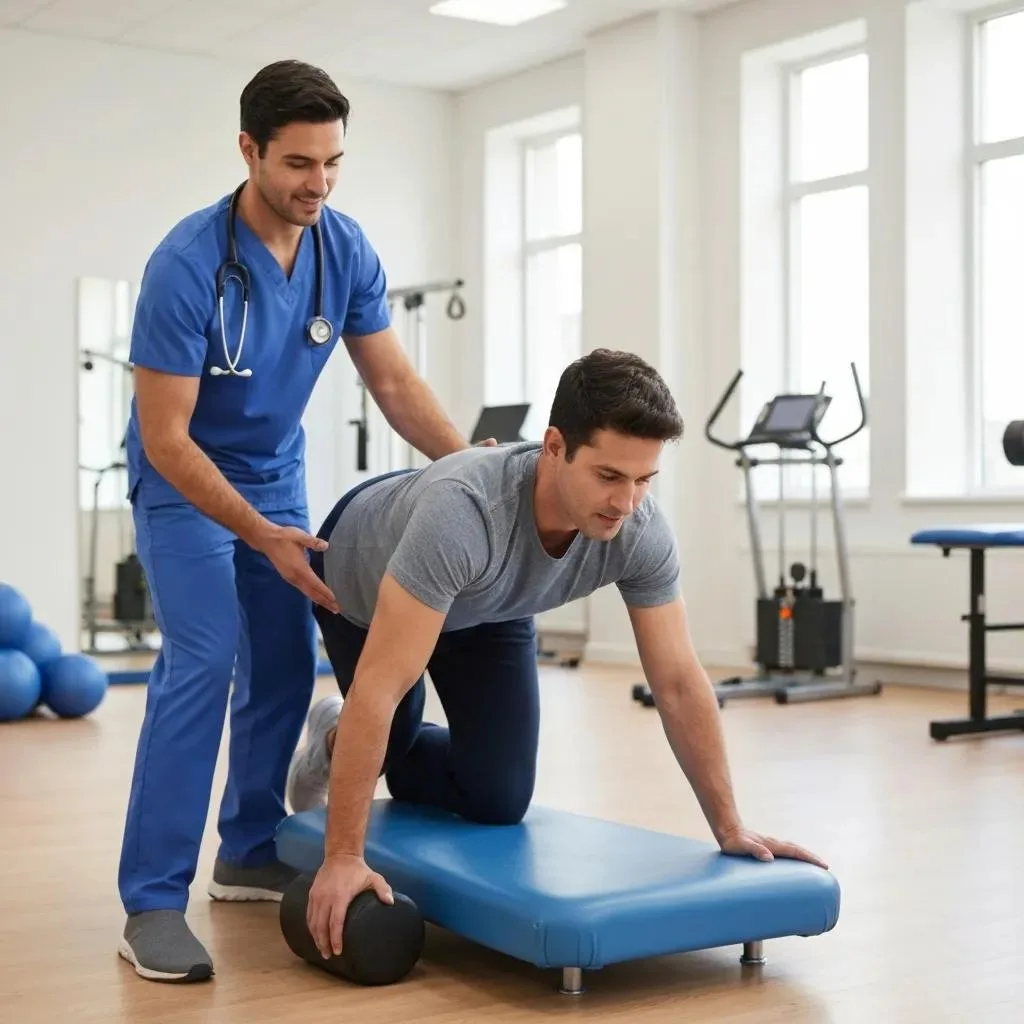
Physical therapy focuses on improving balance and coordination across everyday movement tasks. It examines how the body responds during activity, which affects stability and control while walking and moving. Physical therapists assess your strength and walking patterns, and this guides the development of a personalized treatment plan. The following are physical therapy strategies for improving balance and coordination:
Fall Risk Education
Fall prevention services are often included in rehabilitation programs that address balance and mobility. Care includes education that supports safer movement and improved functional independence during daily activities. Patients receive instruction that supports awareness of safe mobility during daily activities, such as gait training. This helps you navigate uneven surfaces, and it lessens fall risk in various environments.
Therapy for Daily Tasks
Some physical therapy plans focus on mobility to complete daily tasks at home. Structured therapy planning connects treatment goals with functional movement needs, such as opening doors or getting out of bed. In-home care supports patient-specific treatment, and therapists align interventions with mobility limitations identified after patient consultations. Some interventions include:
- Walking stability
- Transfer difficulty
- Dressing and hygiene
Tasks may be adjusted across sessions to reflect changing mobility demands. Some therapists adjust guidance to reflect a patient’s household layout, where space constraints influence how functional tasks are completed. Care planning supports balance-focused rehabilitation, and therapists apply coordinated treatment approaches that reinforce functional movement outcomes.
Strength and Stability Work
Therapists deliver strength-based rehabilitation within individualized programs. Exercise interventions support recovery of general strength for daily movement tasks. Therapists incorporate strength development into treatment plans after injury, surgery, or reduced physical capacity. They select movement-based exercises to improve physical performance. Regular sessions support long-term improvement, and therapists increase movement demands as strength increases.
Gait Coordination Training
Gait refers to walking ability and the manner in which a person walks. Therapy services include gait-focused rehabilitation to meet mobility and functional movement demands. The practice includes post-operative rehabilitation, which involves movement recovery when normal walking has been disrupted.
Since balance and coordination are linked, a patient must relearn body position while moving forward. Therapy supports training inside real movement environments, where walking occurs in hallways, rooms, and entry spaces. That makes coordination work more specific because it reflects the surfaces and turns that shape everyday mobility.
Water-Based Rehabilitation
Therapists provide aquatic therapy as a water-based rehabilitation service, and structured sessions support movement during recovery from injury, surgery, or reduced mobility. Patients perform guided activities in water when land-based movement presents difficulty. Water therapy decreases resistance, which reduces joint pain during movement. It may also increase flexibility. Therapists usually structure each session around functional rehabilitation goals.
Book a Physical Therapy Session
Therapy strategies for balance and coordination are directed towards structured movement-based rehabilitation designed to address functional mobility limitations. Interventions are aimed at balance, strength, and gait, and movement control supports safe and effective performance of daily activities. Regular therapy sessions can help promote stability in normal movement activities and functional transitions. Contact a therapy service today to schedule an evaluation of movement and mobility.
- Dermatologic Care for Patients of All Ages
- The Role of Pediatric Dentistry for Children’s Oral Health
- Maximizing the Benefits of Physical Therapy for Long-term Health
- Sedation Dentistry Techniques for a Comfortable Dental Procedure
- Physical Therapy Strategies for Improving Balance and Coordination
