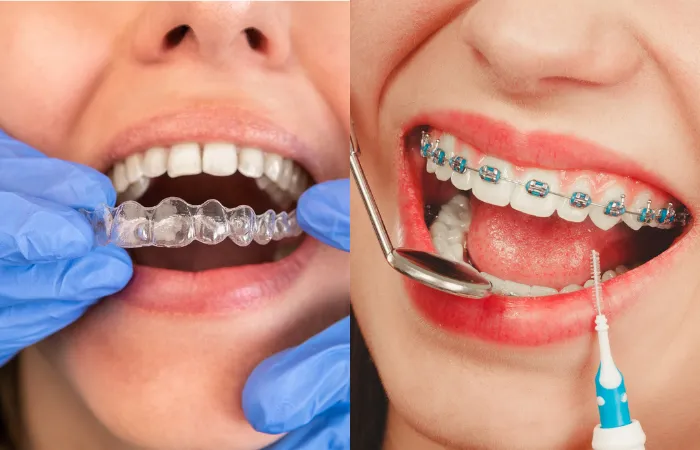
Choosing between Invisalign and traditional braces is a fundamental decision for patients seeking a straighter and healthier smile. Both options are designed to correct alignment issues, but they differ in appearance, maintenance, and treatment experience. Understanding how Invisalign compares with traditional braces can help patients evaluate which approach best fits their dental needs and long-term goals. Here are some key points to evaluate when comparing Invisalign and traditional braces:
Comparing Appearance and Flexibility
Aesthetics play a key role in orthodontic decisions. Traditional braces consist of visible metal components, so they alter a person’s appearance during treatment. Since Invisalign uses clear aligners, the trays are almost invisible to observers.
Daily routines differ significantly between the two options. Metal braces require specific dietary restrictions, and patients have to avoid hard or sticky foods. If a patient wears clear aligners, they remove the aligners before meals. Professional settings sometimes dictate a patient’s preference for discreet devices. Invisalign aligners blend with natural teeth, and users can speak in meetings without feeling self-conscious.
Matching the Right Option
Orthodontists evaluate the severity of dental misalignment before recommending a treatment. Severe bite issues require constant force, and traditional braces provide continuous pressure. Braces attach permanently, allowing them to handle complex rotations and vertical tooth movements effectively.
Invisalign works well for mild to moderate spacing and crowding problems. The clear aligners shift teeth gradually, but they rely on patient compliance. If a case is highly complex, a dentist may advise against removable trays. Dental history also influences the final orthodontic recommendation. Some patients have dental implants or bridges, which can limit the use of certain devices.
Evaluating Maintenance and Comfort
Oral hygiene practices vary based on the selected device. Brushing around metal wires takes time, and patients often use special floss threaders. When individuals use Invisalign, they brush their teeth normally without any obstructions. Metal brackets can irritate the inner cheeks, and the wires can cause minor abrasions. Invisalign trays, made of smooth plastic, eliminate friction against oral tissues.
Weighing Time and Professional Guidance
Treatment duration depends on the specific dental issues and complexity. Traditional braces usually stay on for about two years, and severe cases take longer. Invisalign often requires 12 to 18 months, and the timeline varies for each individual.
Office visits occur at different intervals for each option. Orthodontists tighten metal braces every four weeks on average, and they monitor the progress closely. When a patient chooses clear aligners, they can switch trays at home and visit the clinic less frequently. The dentist checks the patient’s oral health every six to eight weeks.
During routine check-ups, orthodontists evaluate the progress and make necessary adjustments. They may trim wires or replace elastic bands for metal braces. For Invisalign, they take new impressions and create a new series of aligners to continue shifting teeth into place.
Schedule Your Invisalign Consultation Today.
Choosing the right orthodontic treatment is a fundamental step toward dental health. Traditional braces offer reliability for severe cases, but clear aligners provide aesthetic benefits and convenience. Professional evaluations are the most effective approach to determining the right option. Contact a qualified dental specialist near you to schedule your Invisalign consultation today.
- Dermatologic Care for Patients of All Ages
- The Role of Pediatric Dentistry for Children’s Oral Health
- Maximizing the Benefits of Physical Therapy for Long-term Health
- Sedation Dentistry Techniques for a Comfortable Dental Procedure
- Physical Therapy Strategies for Improving Balance and Coordination
