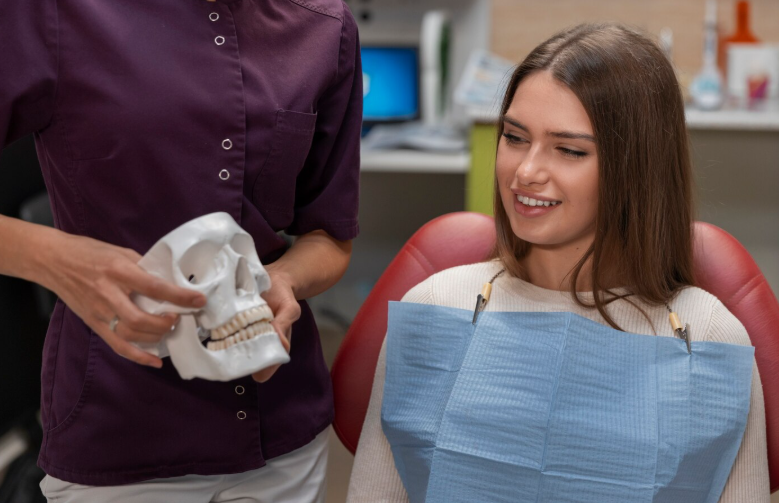
Missing teeth require clinical evaluation by a qualified dental professional. Patients may experience structural changes in the mouth after losing a tooth, and these changes affect daily physiological functions. A dentist conducts a thorough examination of the oral cavity during the initial consultation to determine the most appropriate treatment options. Here is more information on tooth loss and crowns and bridges as restorative options:
What Is Tooth Loss?
Tooth loss refers to the physical absence of one or more teeth from the dental arch. This condition alters the alignment of the surrounding dentition, and it affects the patient’s ability to chew properly. Dentists classify this absence as either partial or complete. Clinical treatments such as crowns and bridges address the spaces left by missing teeth.
What Causes It?
Several physiological and environmental factors cause the loss of natural teeth. Severe periodontal disease destroys the supporting tissues around the teeth, and this tissue degradation leads to eventual tooth detachment. Bacterial plaque hardens into calculus without proper oral hygiene. The resulting inflammation damages the soft gums and the underlying bone.
Physical trauma also accounts for some cases of missing dentition. Accidents generate sudden impact forces on the oral structures, which can completely avulse a tooth from its socket. Advanced dental cavities decay the tooth structure beyond the point of medical repair, and a dentist extracts the severely decayed tooth to prevent systemic bacterial infection.
What Are Crowns and Bridges?
A dental crown is a custom-fabricated prosthetic cap placed over a damaged tooth or an implant. Dental laboratories construct these caps, and the dentist cements the crown permanently in place. The crown replicates the natural tooth’s anatomical shape. It restores the physical strength of the compromised dental structure.
A dental bridge is a prosthetic appliance designed to span the gap left by a missing tooth. The bridge consists of a false tooth anchored by adjacent abutment teeth, and these abutment teeth provide the necessary mechanical support for the appliance. The false tooth replaces the missing structure within the dental arch. This continuous prosthetic unit restores the functional chewing surface.
How Do They Work?
Crowns function by completely encasing the visible portion of a damaged tooth. The dentist prepares the original tooth by removing a specific amount of enamel, then secures the crown over the remaining structure with dental cement. This physical barrier protects the underlying tooth from further bacterial invasion, and it absorbs the mechanical forces generated during chewing.
Bridges function by distributing the physical load across the supporting abutment teeth. The dentist prepares the teeth on either side of the edentulous space, and they attach the bridge framework to these prepared anchors. The false tooth sits in the vacant anatomical space. This mechanical arrangement prevents the surrounding teeth from shifting out of their correct positions.
What Are the Benefits?
These dental prosthetics offer several structural advantages for patients experiencing tooth loss. They restore the patient’s ability to chew effectively, and they correct speech impediments caused by missing dental structures. The physical presence of the prosthetics maintains the natural shape of the patient’s face. They prevent the surrounding natural teeth from drifting into the empty sockets.
Consult a Dentist Today
Clinical evaluation is a standard procedure for addressing tooth loss. A dental professional assesses the oral cavity, and they recommend the most appropriate prosthetic treatments based on the findings. Patients benefit from scheduling a diagnostic appointment to review their specific structural needs. Contact a local dental clinic to initiate this clinical assessment process.
- Dermatologic Care for Patients of All Ages
- The Role of Pediatric Dentistry for Children’s Oral Health
- Maximizing the Benefits of Physical Therapy for Long-term Health
- Sedation Dentistry Techniques for a Comfortable Dental Procedure
- Physical Therapy Strategies for Improving Balance and Coordination
